Bio tanks and sewage treatment plants
- Commercial
- Homeowners
A bio tank, or sewage treatment plant, treats the waste water from a property that is not connected to the mains sewer. It is compact, protects local waterways and is designed to meet current regulations.
We supply and install treatment plants, from assessing your existing drainage to completing the installation and confirming it complies.
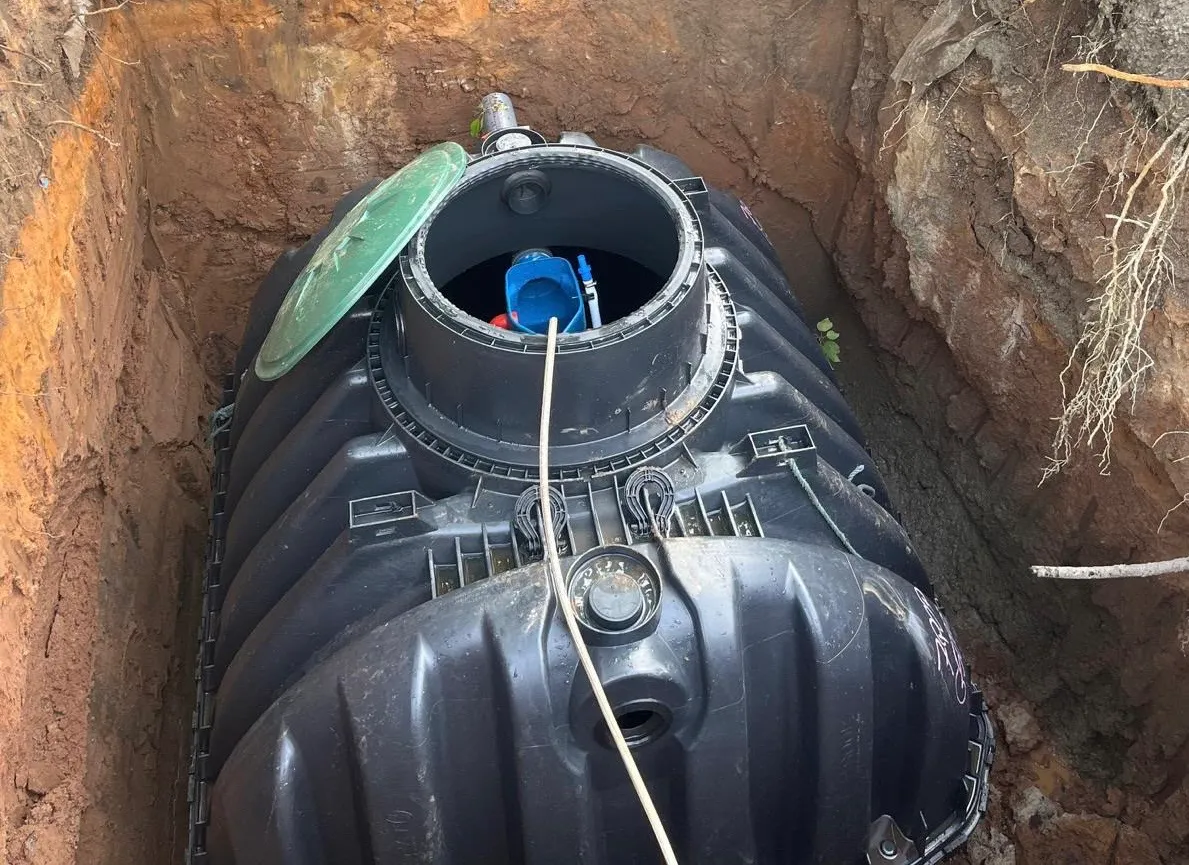
Key
- Inlet from the property
- Package sewage treatment plant
- Outlet to drainage field
Section A-A
Package sewage treatment plant
Scale
NTS
Typical section: bio tanks & treatment plants. Indicative, not to scale.
The challenge
The rules changed, and many septic tanks no longer comply
A septic tank that discharges straight to a ditch or stream does not meet the Environment Agency’s rules. It is often discovered at the worst possible time: in the buyer’s survey.
We have delivered specialist groundworks across the North West since 2008. We know where these projects go wrong, and we plan for it before work starts.
Two kinds of client
Which one are you?
My septic tank has failed and I am selling the house
You are working to someone else’s deadline. Call us with what the survey found. We will explain what the regulations require and how quickly the work can be completed.
I am specifying a treatment plant for a development
Send us the drawings and the number of plots. We install the plant as part of the groundworks package, so the drainage remains one contractor’s responsibility.
Case studies
Bio tanks & treatment plants we have delivered
Our process
Site to sign-off
Three steps, whether it is a machine base for a factory or a treatment plant for a farmhouse.
Step 1: Tell us about the project
Call us or send the drawings. If it helps, we will arrange a site visit.
Step 2: A clear price, with the risks identified
We review the ground conditions, access and programme, and raise anything that could add cost later, while it is still inexpensive to resolve.
Step 3: Delivered and signed off
Built to programme by our own team and plant, and handed over with the paperwork that goes with it.
What our clients say
“We are really pleased with what has been done. It has been a pleasure to have them working here.”
What is at stake
When groundworks goes wrong
- A house sale delayed or lost
- A system that still does not meet the rules
- Disruption to the garden that was not planned for
When it is done right
A compliant treatment plant installed, the garden reinstated, and the paperwork your buyer’s solicitor needs.
What affects the price
Every project is priced on its own requirements. These are the factors that make the biggest difference, and we will discuss each one with you before work starts.
- The size of plant the property requires
- Access for an excavator to the tank position
- Whether the existing septic tank must be removed
- Where the treated water discharges: a drainage field or a watercourse
- Distance from the property and a power supply for the plant
Accreditations for this work
- Confined Spaces
Connections and chamber work proceed without waiting for a specialist subcontractor.

Water supply work is done to the regulations the water company checks against.
On site
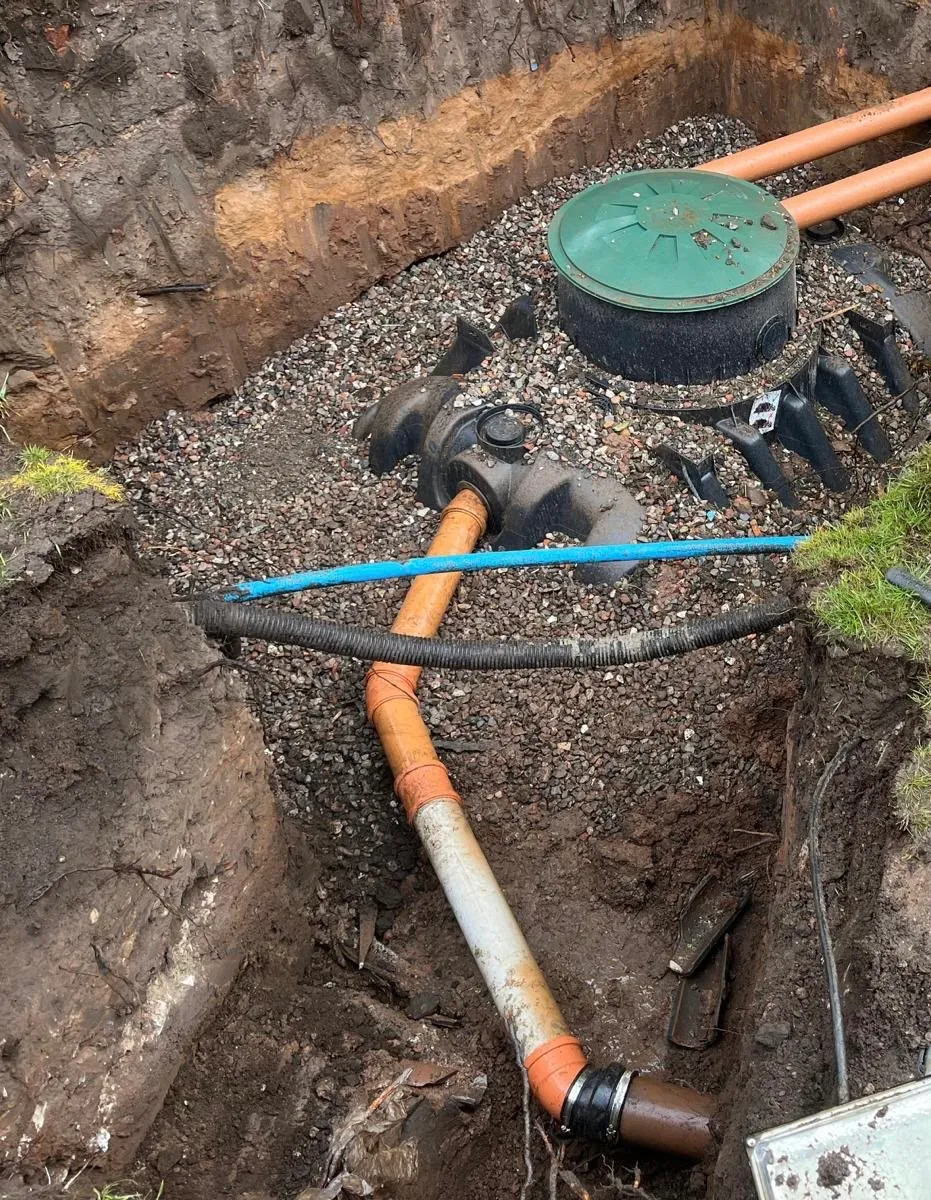
Pipework and power to a treatment plant 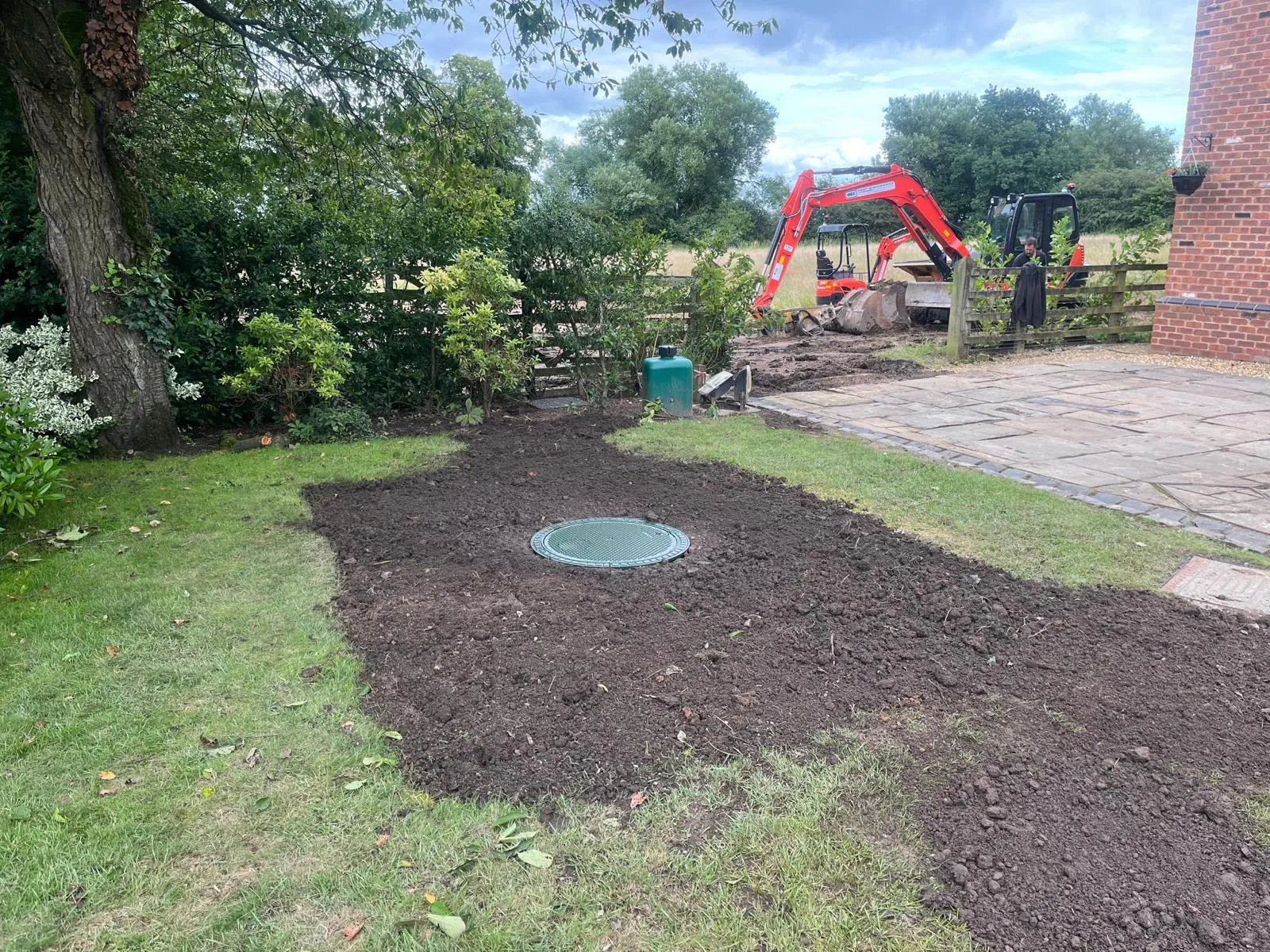
Back in, lid level, garden reinstated
Questions we get asked
My septic tank has failed its survey and I am selling. What now?
Call us. We will assess what you have, explain what the regulations require and how quickly the work can be completed. Our guide for sellers explains the rules in full.
What is the difference between a septic tank and a treatment plant?
A septic tank separates the waste and allows the liquid to drain away. A treatment plant goes further and treats it, so it is clean enough to discharge in more places, including to a watercourse.
Do you assess the existing drainage first?
Yes. We assess the existing system before recommending anything, so the property gets the right solution.
Have a project that needs pricing?
Send us the drawings, or we will arrange a site visit. We will give you a clear price and tell you about any risks we can see.